
by Missy Patterson | May 7, 2025 | Home Buyers, Mortgage Rates
If you’re a homeowner, homebuyer, investor, or real estate professional, you’re likely wondering: What happens to the housing market during an economic slowdown? As the economy cools, its ripple effects can be felt across home prices, mortgage rates, rental demand, and new construction.
In this article, we’ll break down what an economic slowdown means for the real estate market, including who might benefit—and who should be cautious.
1. Home Prices May Fall or Flatten
One of the first effects of a slowing economy is reduced homebuyer demand. When consumers feel uncertain about their income or job security, they’re less likely to make large purchases like a house. This can lead to:
- Slower home price growth
- Price drops in overvalued markets
- More price reductions and motivated sellers
In tougher economic conditions, foreclosures and distressed sales may rise, adding downward pressure on prices.
2. Home Sales Often Decline
Economic uncertainty often leads to fewer home transactions. Why?
- Buyers may wait for better conditions.
- Sellers may hold off, fearing a weak market.
- Mortgage lenders may tighten standards, reducing who can qualify.
This results in fewer listings, slower sales cycles, and lower market activity overall.
3. Mortgage Rates Could Drop—But With Limited Impact
During a slowdown, central banks often lower interest rates to stimulate spending. This can bring mortgage rates down as well, which is good news for borrowers.
However, low rates alone don’t guarantee a housing rebound. If consumer confidence is low, many buyers still choose to wait.
Quick tip: Savvy buyers with stable jobs may find this is a great time to buy with lower monthly payments.
4. Rental Demand May Increase
As buying becomes more difficult or uncertain, demand for rental housing tends to rise. This shift can benefit landlords, especially in:
- Urban areas
- High-cost markets
- Cities with younger populations
In some cases, rents may increase even if home prices fall.
5. New Construction Often Slows Down
Homebuilders are highly sensitive to economic trends. During a slowdown, many developers may:
- Delay or cancel projects
- Focus on lower-risk builds
- Struggle to secure financing
This can reduce new home inventory, which may help prevent a long-term oversupply.
6. Local Markets Will Vary
Not all housing markets react the same way during a slowdown. For example:
- Tech-driven cities or places with strong job markets may stay resilient.
- Overheated markets with recent rapid price growth may see sharper corrections.
- Affordable, growing areas may remain attractive for buyers.
Understanding your local market dynamics is crucial during uncertain times.
Conclusion: What Should You Do During a Slowdown?
An economic slowdown doesn’t always spell disaster for the housing market, but it does shift the landscape. Here’s how to think about your next move:
- Buyers: Look for opportunities in lower prices and interest rates.
- Sellers: Be realistic about pricing and flexible with negotiations.
- Investors: Monitor rental demand and long-term trends.
- Homeowners: Focus on financial stability and stay informed.
Whether you’re buying your first home or managing a real estate portfolio, staying informed and adaptable is key to navigating economic change.

by Missy Patterson | Apr 23, 2025 | For Buyers, Mortgage Rates
In today’s unpredictable housing market, mortgage rates seem to shift daily — sometimes even hourly. For homebuyers and homeowners looking to refinance, this uncertainty can feel overwhelming. But the good news? You can take control, even when mortgage rates are a moving target.
Here’s a practical guide to navigating rising and falling rates, so you can make confident, informed decisions.
🔍 Why Mortgage Rates Fluctuate
Before diving into what to do, it helps to understand why rates change in the first place. Mortgage rates are influenced by several factors, including:
- Inflation
- The Federal Reserve’s monetary policy
- Economic growth indicators
- Bond market performance
Because of these variables, rates can change quickly — sometimes without much warning.
🏦 1. Get Pre-Approved and Set a Budget
Why it matters: A mortgage pre-approval not only tells you how much you can afford, but it may also lock in a rate for 30 to 90 days. That gives you some breathing room if rates rise during your home search.
Bonus tip: Even if you’re pre-approved, continue monitoring rates. Some lenders offer updated rate quotes if you haven’t closed yet.
📈 2. Monitor Market Trends and Mortgage News
Stay informed by tracking mortgage rate trends through financial news, lender websites, and mortgage calculators. Pay attention to:
- Federal Reserve announcements
- Economic data like inflation reports and job numbers
- Real estate market updates
Key takeaway: Timing your move in the market isn’t about guessing; it’s about staying informed.
🧑💼 3. Work With a Mortgage Broker
Mortgage brokers have access to multiple lenders and loan products. They can help you:
- Compare rates quickly
- Find special programs or first-time buyer incentives
- Navigate rate lock options or flexible terms
Pro tip: A good broker can help you react quickly to market changes — a huge benefit when rates are shifting.
🔒 4. Use a Mortgage Rate Lock (With a Float-Down Option)
When you’re under contract, consider locking in your mortgage rate. This protects you if rates rise before closing.
What’s a float-down? Some lenders allow you to “float down” to a lower rate if the market drops significantly before you close. Be sure to ask about this feature when comparing lenders.
💸 5. Explore Adjustable-Rate Mortgages (ARMs)
If current fixed rates feel too high, an ARM might be a good temporary solution.
How ARMs work:
- You get a lower initial rate for the first 5, 7, or 10 years.
- After that, your rate adjusts periodically based on the market.
Best for: Buyers planning to move or refinance before the fixed period ends.
🎯 6. Consider Buying Mortgage Points
Mortgage points are upfront fees paid to lower your interest rate. This strategy can lead to long-term savings, especially if you plan to stay in your home for several years.
Example: Paying 1 point (equal to 1% of your loan) might reduce your rate by 0.25%.
Rule of thumb: Use a mortgage point calculator to see when your break-even point occurs.
🔁 7. Plan to Refinance When Rates Drop
If you need to buy when rates are high, keep refinancing on your radar. When the market improves, you can refinance to a lower rate and reduce your monthly payments.
Just be aware of:
- Closing costs
- Potential prepayment penalties
- How long you plan to stay in the home
✅ Final Thoughts
Yes, mortgage rates are unpredictable — but that doesn’t mean you’re powerless. With the right tools, timing, and team, you can make smart moves no matter what the market is doing.
Remember:
- Get pre-approved and lock in when the time is right.
- Explore adjustable-rate options and mortgage points.
Be ready to refinance when rates improve.

by Missy Patterson | Mar 10, 2025 | Mortgage Rates
Are you wondering whether now is the right time to buy a home? With real estate experts predicting rising home prices, it’s natural to feel pressure to act quickly. However, buying a home is a significant financial decision, and it’s essential to consider several factors before making a move. This article will guide you through the key things to think about when deciding whether to purchase a home in today’s market.
1. The Impact of Rising Interest Rates on Home Affordability
Interest rates have a major impact on how affordable homes are. In recent years, interest rates were low, which made mortgages more affordable. But with inflation on the rise, central banks have started increasing interest rates, meaning mortgage rates are going up too.
Higher mortgage rates mean higher monthly payments. Even if home prices are still increasing, rising interest rates could make buying a home more expensive. However, if you’re able to lock in a mortgage rate before they rise further, it could be a good time to buy before rates go even higher.
2. Home Prices Are Likely to Keep Rising
Real estate experts predict that home prices will continue to rise in many parts of the country due to high demand and low inventory. The housing market may be experiencing high prices now, but waiting could mean paying even more later.
However, it’s important to remember that buying at a higher price may not always be the best financial decision if the price doesn’t match the home’s value. Carefully evaluate whether homes are overpriced in your area, and make sure the long-term value of the property justifies the price.
3. Understanding Local Market Conditions
While national trends offer insight into the overall housing market, real estate markets can vary significantly from one location to another. In some cities, prices may be soaring, while other regions may be seeing a slowdown.
To make an informed decision, you need to focus on the housing market in your specific area. Consider local factors such as job growth, population trends, and the potential for future development. Areas experiencing strong economic growth are more likely to see home prices continue rising, while oversupplied markets may stabilize or even see price drops.
4. Assess Your Personal Financial Situation
Before jumping into the homebuying process, evaluate your financial health. Do you have a steady income, a good credit score, and sufficient savings for a down payment? Most lenders require a down payment of 20%, plus closing costs, home inspections, and other expenses.
In addition to the upfront costs, homeownership comes with ongoing expenses such as property taxes, insurance, utilities, and maintenance. Be sure that you can comfortably afford all of these costs in addition to your monthly mortgage payment.
5. The Importance of Long-Term Investment
If you plan to stay in your new home for many years, fluctuations in the market may matter less. Over time, real estate tends to appreciate, and owning a home allows you to build equity. If you’re in it for the long haul, the short-term price increases may be worth it.
However, if you’re considering moving in a few years, you might want to be cautious. Fluctuations in the housing market could impact your ability to sell your home at a profit. If you’re uncertain about your long-term plans, renting might provide more flexibility.
6. Renting as an Alternative
If buying a home doesn’t feel right for you right now, renting is a viable alternative. Renting offers flexibility, especially if you’re unsure about your future or if the market is too competitive. It also gives you time to save for a larger down payment or wait for market conditions to stabilize.
Renting could also be a good option if you’re not ready to commit to homeownership but still want to live in a specific area.
7. The Challenge of Timing the Market
Trying to time the real estate market can be tricky, and even experts can’t always predict what will happen next. The best approach is to focus on your own needs and circumstances. Ask yourself: Do I need a home now? If the answer is yes, then it might be the right time for you to buy, even if prices are rising.
If you’re not in a rush to buy, however, it may be worth waiting for market conditions to change.
Conclusion: Is Now the Right Time to Buy a Home?
Ultimately, the decision to buy a home should be based on your personal situation, not just market trends. While experts predict that home prices will continue to rise, buying a home is a long-term investment that requires careful thought and consideration.
If you are financially ready and plan to stay in your home for years to come, buying now could be a good choice. But if you’re uncertain or if your financial situation isn’t ideal, waiting might be the better option.
In any case, the key to making the right decision is to evaluate your financial stability, the local market conditions, and your long-term goals. Don’t feel pressured to buy just because experts predict rising prices—make sure you’re ready for the responsibility of homeownership.
If you’re ready to start the homebuying process, make sure to consult with a real estate agent to get a better understanding of the local market and find the best home for your needs.

by Missy Patterson | Oct 17, 2024 | Buying Tips, For Buyers, Mortgage Rates
Homeowners typically slow down their moving plans as the summer months wrap up, and as a result, fewer homes are listed for sale in the fall. It’s a predictable, seasonal trend in real estate. But this year, mortgage rates came down at the same time the number of homes on the market usually starts to decline. So, what happened? More homeowners decided to sell, so more homes came to the market.
The most recent data from Realtor.com reveals that in September, the number of homes put up for sale increased by 11.6% compared to this time last year.
As the green circle in the graph below shows, the typical September decline in homes coming to the market didn’t happen – that number actually went up (see graph below):
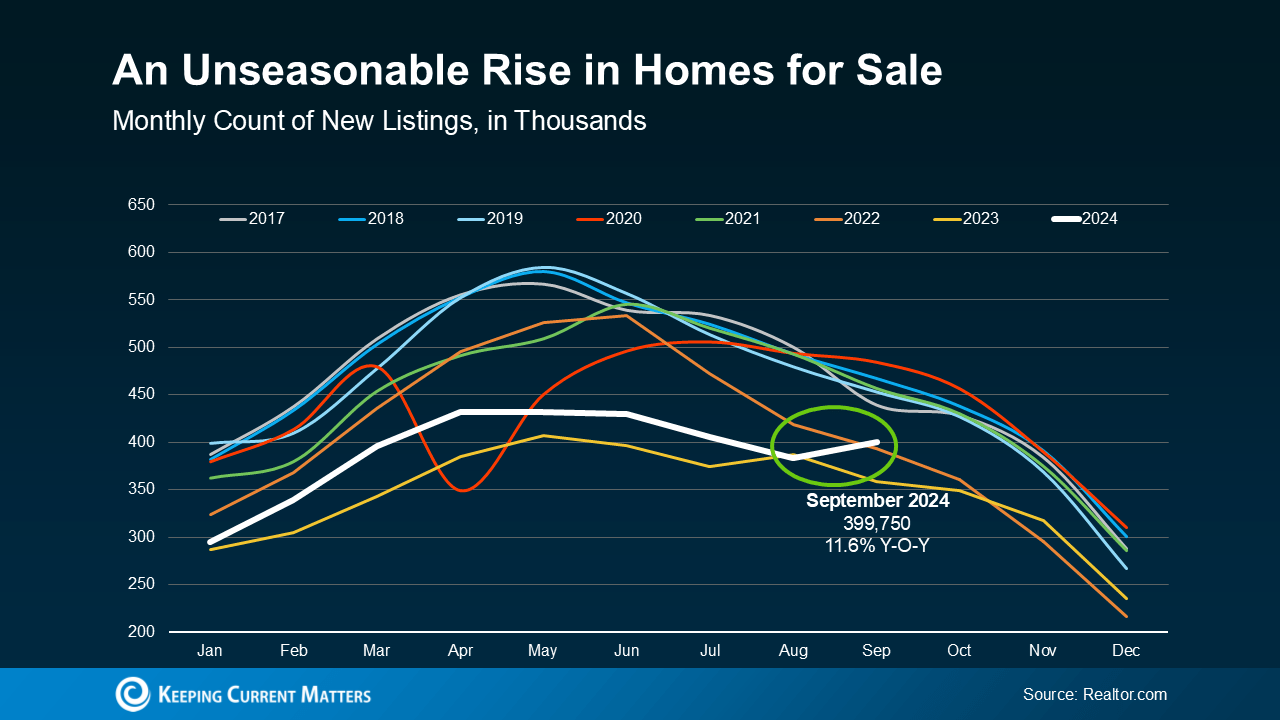 Ralph McLaughlin, Senior Economist at Realtor.com, explains why there was an unseasonable rise:
“This sharp increase is largely due to the decline in mortgage rates in mid-August, enticing homeowners to sell.”
So, as rates came down at the end of the summer, more people jumped into the market and decided to make their move.
What Does This Mean If You’re Looking To Buy a Home?
It means more fresh options to choose from than you’ve had in a while – not the ones that have been sitting around, unsold.
But keep in mind, mortgage rates have been volatile lately, ticking up slightly in recent weeks, which could limit the number of people who feel comfortable with the idea of selling in the months ahead. And in this market, it’s mortgage rates that are largely driving homeowner decisions.
Why Buy Now, Rather Than Wait?
Whether you’re looking for a starter home, an upgrade, or hoping to downsize, you have more homes to choose from right now. And if you can find what you’re looking for, know that these new, fresh options won’t be on the market forever. So, staying on top of what’s available in your local area with a trusted agent is key.
And remember, one month doesn’t make a trend. So, what does that mean going forward? Whether more homeowners than normal continue to put their houses on the market will largely depend on what happens with mortgage rates and the economic factors that impact them, like inflation, employment, and the reactions by the Federal Reserve.
With that in mind, now might be your moment, while more homes are available – if you’re ready, willing, and able to buy this fall.
Lawrence Yun, Chief Economist at the National Association of Realtors (NAR), explains:
“The rise in inventory – and, more technically, the accompanying months’ supply – implies home buyers are in a much-improved position to find the right home and at more favorable prices.”
Bottom Line
As rates came down at the end of the summer, sellers started to trickle back into the market, which means buyers have more choices right now. And working with a trusted local real estate agent is the best way to take advantage of your new options before they’re all scooped up.
