
by Missy Patterson | May 3, 2025 | Home Prices
Let’s face it—most of us don’t spend much time thinking about tariffs. They sound like something best left to economists and politicians, right?
But if you’re planning to buy, sell, or build a home, tariffs—especially those like the ones imposed during the Trump administration—can quietly influence the housing market in big ways. Here’s how international trade policy might affect the price of your dream home.
What Is a Tariff and Why Does It Matter?
A tariff is essentially a tax on goods imported from other countries. The goal is to make imported products more expensive so people are encouraged to buy from domestic manufacturers.
But those increased costs don’t disappear—they get passed down the line.
When tariffs are applied to materials like:
- Steel
- Aluminum
- Lumber
- Appliances
- Cabinetry
…the cost to build or renovate homes goes up. And that affects real estate prices across the board.
How Tariffs Affect New Home Construction
Tariffs hit homebuilders especially hard. When the cost of construction materials rises, developers may:
- Raise home prices
- Delay or scale back projects
- Substitute cheaper (and possibly lower-quality) materials
Let’s say a builder planned to construct 12 homes. If imported lumber and stainless steel costs jump by 15%, they’re forced to make tough choices. Most likely, they won’t eat that cost—they’ll pass it on to buyers.
This means:
- Fewer new homes are built
- Inventory shrinks
- Prices go up due to limited supply and steady demand
Tariffs and Home Renovations
It’s not just new builds that are impacted. Tariffs can make home renovations more expensive too.
Think about a homeowner planning a kitchen remodel before selling. If imported fixtures cost more due to tariffs, they may:
- Increase their asking price to cover the upgrade
- Skip the renovation, which could lower their home’s value or market appeal
Even Resale Buyers Feel the Pinch
You might think this doesn’t affect you if you’re buying an existing home. But think again.
Higher home prices—whether from new builds or increased competition—can stretch your budget. If construction slows and inventory tightens, even resale homes become more expensive.
Real Estate Is Tied to Global Trade
Tariffs don’t automatically crash or spike the housing market. Many factors influence pricing—like:
- Interest rates
- Local supply and demand
- Labor shortages
- Broader economic trends
But the key takeaway? Real estate doesn’t exist in a bubble. What happens with trade policy and tariffs can have a very real effect on your wallet.
Key Takeaways: How Tariffs Affect Home Prices
- Tariffs increase material costs, which drives up home construction and renovation prices.
- Builders often pass those costs onto buyers, leading to higher real estate prices.
- Fewer homes get built, creating limited housing inventory.
- Even existing home prices can rise due to reduced supply and higher demand.
- Global trade policy is more connected to your home-buying journey than you might think.
Final Thoughts
If you’re thinking about buying, selling, or building a home, don’t just watch mortgage rates or local listings—keep an eye on global trade policy too. What happens at international borders could impact your housing budget more than you think.

by Missy Patterson | Feb 3, 2025 | For Buyers, Home Prices
The real estate market can feel like a whirlwind, especially as the seasons change. While many people think of spring as the ideal time to buy, there are actually several compelling reasons to consider purchasing a home before the season of blooming flowers and rising prices. Here are three key reasons why buying a home before spring can be a smart move.
1. Less Competition
Spring is traditionally the busiest time for real estate, with a surge of buyers and sellers entering the market. With more buyers in the market, the competition for homes can become fierce. Multiple offer situations are common, and bidding wars can drive prices up, leaving you with fewer options and less room to negotiate.
By purchasing a home before spring, you can avoid the frenzy of a competitive market. The winter months often see fewer buyers, which means you’ll have less competition to contend with. This can give you an upper hand when making an offer, potentially allowing you to negotiate a better price or more favorable terms.
2. Lower Prices
Typically, home prices tend to be lower in the winter months as demand slows down. Sellers who list their homes in the colder months are often more motivated to sell, which can lead to better deals for buyers.
If you can act fast, you may be able to secure a home at a lower price than you would in the spring or summer when the market picks up and demand increases. While the market varies by location, taking advantage of lower prices before spring hits could save you thousands of dollars in the long run.
3. More Time for Renovations and Settling In
Another advantage of buying before spring is the extra time you’ll have to make any necessary renovations or repairs. If you purchase a home in the winter or early spring, you can take advantage of the slower season to work on projects before the warmer months arrive. You won’t be competing with other homeowners for contractors or dealing with the typical busy season for renovations.
By the time spring and summer roll around, you’ll be able to settle into your new home and start enjoying it without the rush or stress of a competitive housing market.
Conclusion
While spring is often seen as the go-to time for buying a home, there are plenty of advantages to acting before the season officially begins. From less competition and lower prices to more time for renovations, buying a home in the winter or early spring could be the strategic move you need to make your dream home a reality. So, if you’re in the market for a new place, consider making your move before the spring rush starts—your future self might thank you!

by Missy Patterson | Oct 3, 2024 | For Buyers, For Sellers, Home Prices
Recent headlines have been buzzing about the median asking price of homes dropping compared to last year, and that’s sparked plenty of confusion. And as a buyer or seller, it’s easy to assume that means prices are coming down. But here’s the catch: those numbers don’t tell the full story.
Nationally, home values are actually rising, even if the median price is down a bit. Let’s break down what’s really happening so you can make sense of the market without getting caught up in the fear the headlines create.
Homes on the Market Right Now Are Smaller
The biggest reason for the dip in median price is the size of homes being sold. The median price reflects the middle point of all the homes for sale at any given time. And that’ll be affected by the mix of homes on the market.
To show you how this works, here’s a simple explanation of a median (see visual below). Let’s say you have three coins in your pocket, and you decide to line them up according to their value from low to high. If you have one nickel and two dimes, the median (the middle one) is 10 cents. If you have two nickels and one dime, the median is now five cents.
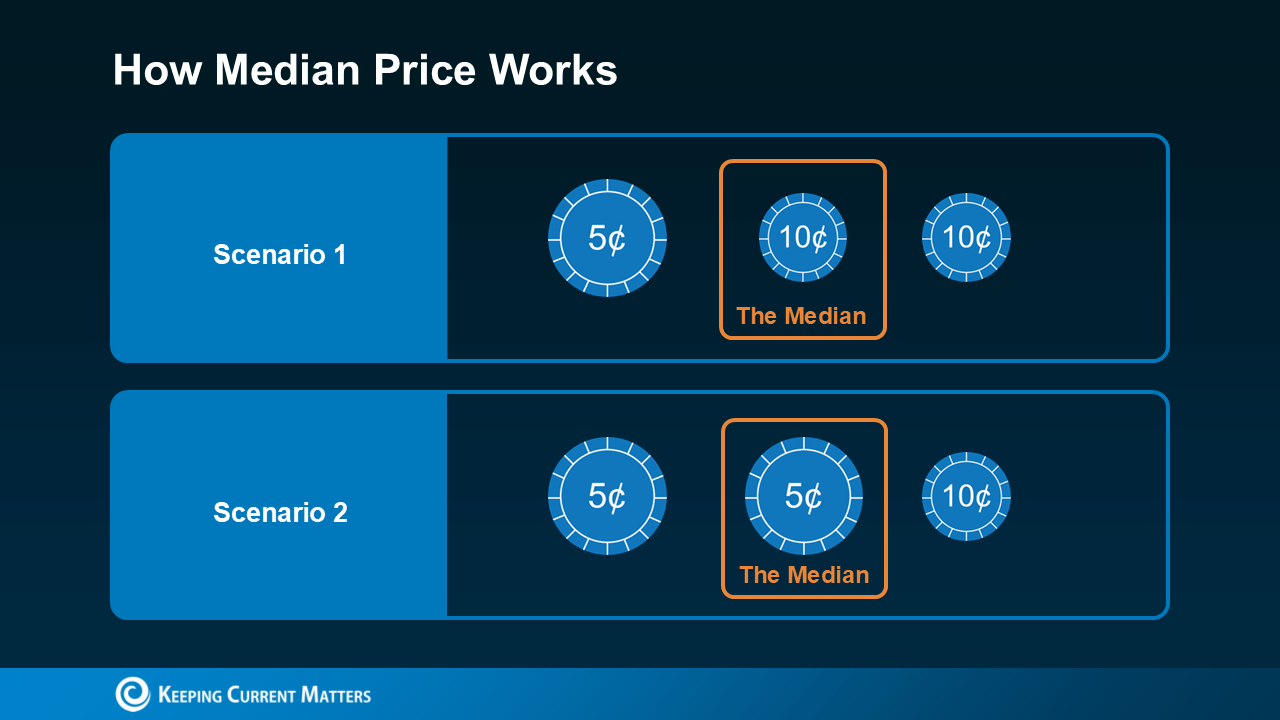 In both cases, a nickel is still worth five cents and a dime is still worth 10 cents. The value of each coin didn’t change. The same is true for housing.
Right now, there’s a greater number of smaller, less expensive homes on the market, and that’s bringing the overall median price down. But that doesn’t mean home values are declining.
As Danielle Hale, Chief Economist at Realtor.com, explains:
“The share of inventory of smaller and more affordable homes has grown, which helps hold down the median price even as per-square-foot prices grow further.”
And here’s the data to prove it.
Price Per Square Foot Is Still Rising
One of the best ways to measure home values is by looking at the price per square foot. That’s because it shows how much you’re paying for the space inside the home.
The median asking price doesn’t take into account the size of different homes, so it may not always reflect the true value. And the latest national price per square foot data shows home values are still increasing, even though the median asking price has dropped (see graph below).
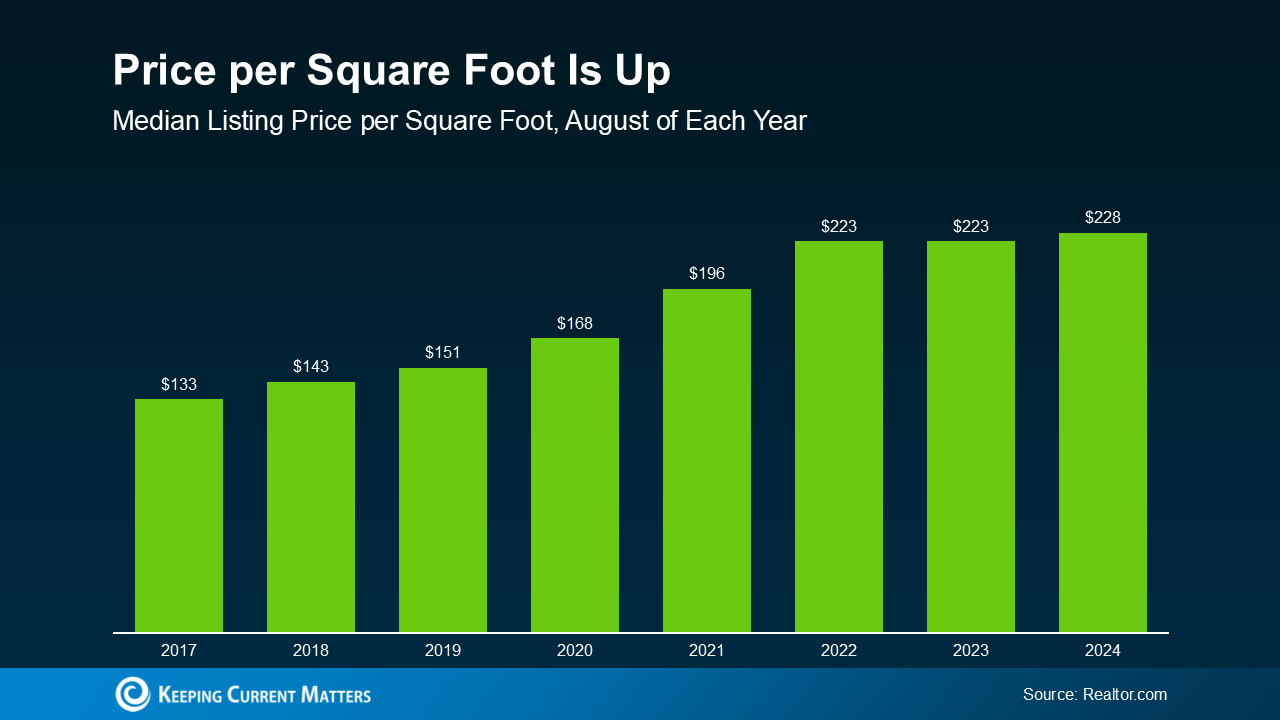 As Ralph McLaughlin, Senior Economist at Realtor.com, explains:
“When a change in the mix of inventory toward smaller homes is accounted for, the typical home listed this year has increased in asking price compared with last year.”
This means that while smaller homes are affecting the median price, the average home’s value is still rising. According to the Federal Housing Finance Agency (FHFA):
“Nationally, the U.S. housing market has experienced positive annual appreciation each quarter since the start of 2012.”
So, while headlines may make it sound like prices are crashing, you don’t have to worry. With a closer look and more reliable data, you can see that prices are still climbing nationally.
But it’s important to remember that home prices can vary by region. While national trends provide a big-picture view, local markets may be experiencing different conditions. A trusted agent is the best resource to explain what’s happening in your area.
Bottom Line
The decrease in median price is not the same as a decrease in home values. The median asking price is down mostly due to the mix of smaller, less expensive homes on the market.
The important thing to focus on is the price per square foot, which is a better indicator of overall market value—and those prices are still going up. If you have questions about what home prices are doing in your area, reach out to a local real estate agent who can provide insights on your specific market.
