
by Missy Patterson | Apr 14, 2025 | Agent Value, Buying Tips, For Buyers
Spring is one of the most active times of year in the real estate world. With more listings, more buyers, and more competition, standing out as a buyer can be a challenge. If you’re planning to purchase a home this season, making a strong and attractive offer is key.
In this article, we’ll break down four smart strategies to help your offer rise above the rest in today’s competitive spring housing market.
1. Get Pre-Approved — Not Just Pre-Qualified
Keyword focus: mortgage pre-approval, home loan pre-approval
Before you start making offers, make sure you’re pre-approved for a mortgage—not just pre-qualified.
Why this matters:
Pre-approval involves a full financial review by a lender and gives sellers confidence that you’re a serious, qualified buyer. It’s one of the easiest ways to boost the strength of your offer.
Pro tip:
Ask your lender for a fully underwritten pre-approval. This gives your offer even more credibility and helps it stand out from others.
2. Make a Strong (and Smart) Offer
Keyword focus: competitive offer, offer above asking price
In spring, homes that are priced right often receive multiple offers. A strategic bid—especially if it’s slightly above the asking price—can make a big difference.
Why this matters:
Sellers are more likely to accept offers that are competitive and demonstrate serious intent. But that doesn’t mean you should overpay.
Pro tip:
Have your agent run a comparative market analysis (CMA) so you can make a smart, informed offer that’s both attractive and financially sound.
3. Limit Contingencies to Make Your Offer Cleaner
Keyword focus: offer contingencies, real estate contingencies
While contingencies protect you as a buyer, too many can make your offer less appealing.
Why this matters:
Sellers prefer offers that carry less risk of falling through. A cleaner offer—one with fewer contingencies—can give you an edge.
Pro tip:
Avoid waiving important contingencies like the home inspection unless you’re absolutely sure. Instead, consider shortening the timelines or removing minor conditions to sweeten the deal.
4. Add a Personal Touch with a Buyer Letter
Keyword focus: home offer letter, personal letter to seller
Sometimes, it’s not all about numbers. Adding a short, heartfelt letter to your offer can make a meaningful impact.
Why this matters:
Sellers are often emotionally connected to their homes. A sincere letter explaining why you love the home can help your offer stand out on a personal level.
Pro tip:
Keep it brief and warm. Focus on what you love about the home and how you envision your life there. Stay positive and respectful—avoid mentioning changes or renovations.
Final Thoughts: Stand Out in the Spring Housing Market
In a busy spring real estate market, you need more than luck to land your dream home—you need a solid strategy. By getting pre-approved, crafting a competitive offer, limiting unnecessary contingencies, and adding a personal touch, you’ll be better positioned to win the home you love.
Looking for guidance on making a winning offer? Partner with a local real estate expert who knows your market and can advocate for you every step of the way.

by Missy Patterson | Feb 17, 2025 | Agent Value, For Sellers
Selling a home is a major financial decision, and while the real estate market offers opportunities, it also comes with challenges. In 2025, many home sellers unknowingly make mistakes that can reduce their chances of getting the best deal. Whether you’re planning to sell soon or just want to prepare for the future, here are 3 critical mistakes to avoid when selling your home.
1. Overpricing Your Home
One of the most common mistakes home sellers make is overpricing their property. While it may seem like a good idea to set a high asking price and leave room for negotiation, overpricing can backfire.
Why Overpricing Hurts Your Sale:
- Buyer Perception: If a home stays on the market too long, potential buyers might assume there’s something wrong with it.
- Price Reductions: If your home doesn’t sell quickly, you may have to reduce the price, which can make it seem less desirable.
- Fewer Offers: A high asking price can deter potential buyers, leading to fewer offers and ultimately a lower final sale price.
Tip: Work with a real estate agent who understands your local market. A competitive, realistic price can attract more buyers, which may lead to a higher sale price in the long run.
2. Neglecting Repairs and Updates
Skipping essential repairs and updates is a costly mistake many home sellers make. Buyers typically prefer homes that are move-in ready, and visible damage or outdated features can deter them, even if the price seems right.
What to Fix Before Listing:
- Minor Repairs: Fix small issues like leaky faucets, cracked walls, or faulty light switches to give the impression of a well-maintained home.
- Update Outdated Features: Consider updating your kitchen or bathroom with affordable renovations that give your home a modern feel.
- Boost Curb Appeal: First impressions matter. Clean up your landscaping, paint the front door, and maintain walkways to make your home inviting from the outside.
Tip: Even if you can’t afford major renovations, small improvements can help your home stand out and potentially fetch a higher price.
3. Not Preparing for Showings
How your home looks during showings can determine if it sells quickly — or at all. Many sellers underestimate the importance of staging and preparing their property for potential buyers.
Steps to Prepare Your Home:
- Clean Thoroughly: A clean home signals to buyers that it’s well-cared for and ready to move into.
- Declutter: Remove personal items, unnecessary furniture, and anything that makes the space feel cramped. Let the home’s potential shine through.
- Stage Your Home: Simple staging, like rearranging furniture or adding decorative touches, can help buyers imagine living in the space.
- Professional Photography: High-quality photos for online listings are a must. Great photos can attract more buyers and lead to more showings.
Tip: Presenting a well-staged, clean, and tidy home will increase the chances of a quick sale at the right price.
Conclusion: How to Sell Your Home Successfully in 2025
To sell your home in 2025 successfully, avoid these three mistakes:
- Price your home realistically based on current market conditions.
- Make necessary repairs and updates to ensure your home is move-in ready.
- Prepare for showings by decluttering, cleaning, and staging your property.
By following these simple steps, you’ll improve your chances of a quick and profitable sale. Partnering with an experienced real estate agent can also guide you through the process and ensure your home is market-ready.

by Missy Patterson | Oct 10, 2024 | Agent Value
If you’re toying with the idea of selling your house, you’re probably wondering how much it’ll cost. To be honest, the final number will depend on several factors like the offer you accept, if you help with your buyer’s closing costs, how many repairs you tackle, and more.
So, to give you a ballpark of what to expect, here’s some information on a few of the expenses you’ll want to be ready for (see graph below):
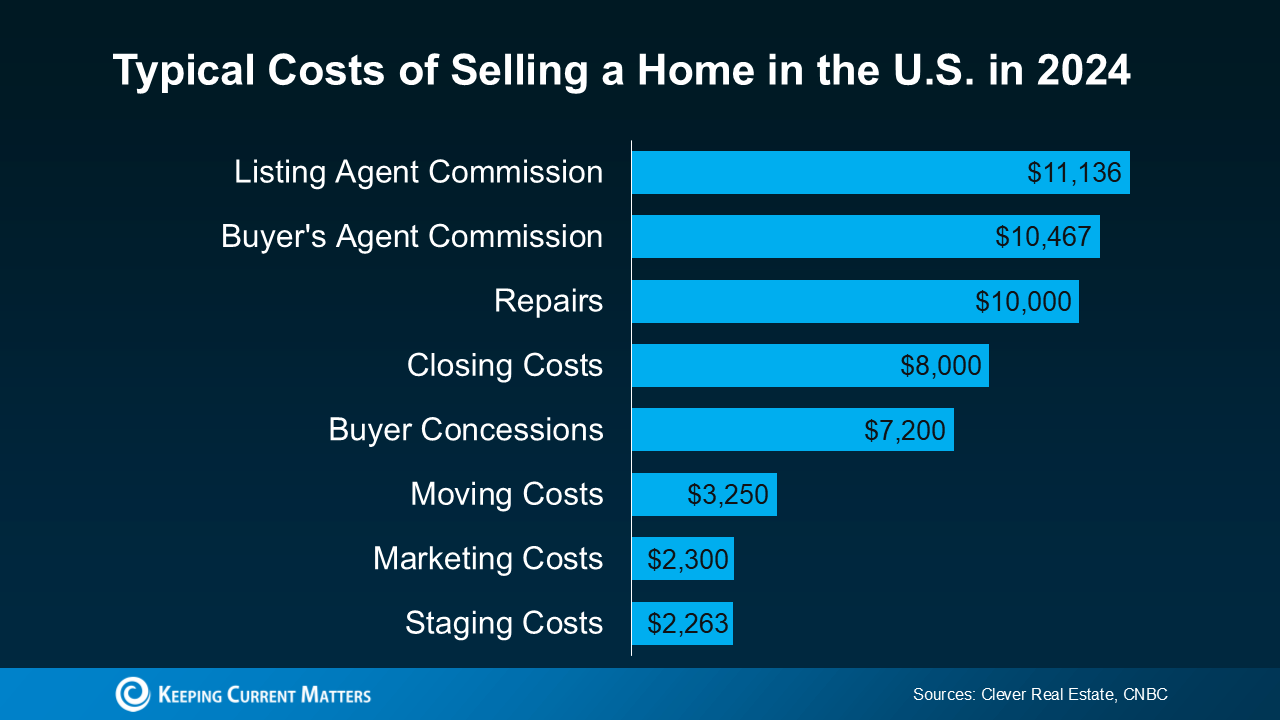 But here’s something that puts those costs into perspective. Most homeowners today have a substantial amount of equity built up in their homes, and that means they stand to make significant gains when they sell. Chances are, you do too. This can help quickly recoup these selling costs. You may even have enough equity leftover to put some toward your next home purchase too.
Let’s dive into a few of the costs from the graph above, so you have a bit more context on what they include and where you may be able to save some money, when it makes sense.
Closing Costs and Commission
These are the fees you’ll pay at the closing table to cover various aspects of the sale. You’ll have your own closing costs and you may even offer to pay some of the buyer’s as a concession. As U.S. News Real Estate explains:
“Closing costs are fees that are paid to finalize the transaction and transfer ownership of the home to the buyer . . . Sellers can expect to pay 2% to 4% of the sale price of the home in fees and taxes on top of the agent commission. Based on the national median home sale price, this means that closing costs in 2023 for sellers are about $7,740 to $15,480. . .”
Taxes are going to vary by state and agent commissions depend on what you agree upon upfront. And keep in mind, that the numbers in the chart above are just an example, not exact figures. Not to mention, if you put money toward things like your property taxes, mortgage escrow, etc. as part of your current mortgage payments – there’s a chance you’ll get a credit back at closing that can help offset some of these selling expenses.
Pre-Listing Inspection and Repairs
One optional step some sellers take is having a pre-listing inspection. It gives you an idea of what may pop up later on in the buyer’s inspection – because those are the items a buyer may ask you to toss in a credit (or concession) to cover later on.
This allows you to get a jump on any repairs and tackle them before you list, so your house is set up to impress from the start.
Again, if you want to skip this step, an agent can help. They’ll be able to give you advice on things like paint colors, small cosmetic repairs, what buyers are looking for, and whether it’s worth tackling anything else ahead of time. This will help make sure you’re spending money on things that are most likely to net you a solid return on your investment.
Home Staging
As inventory grows, you may want to take a few extra steps to make sure your house stands out. Staging is an optional way to make sure your house shows well. It can include bringing in rental furniture if the house is vacant or art to warm up the walls. Some staging can even be done virtually once the photos are taken. But, in general, how much does it cost? According to Bankrate:
“Home sellers typically pay somewhere between $782 and $2,817 in home staging costs . . . but the price tag can vary widely.”
If you want to skip this step, you could opt to lean on your agent’s advice for what looks good and what may feel cluttered. A great agent will suggest things like removing a chair to open up the flow of a room, laying down a rug to add warmth to a space, or taking down photographs to de-personalize strategic areas.
Why Leaning on an Agent Is Key
If you’re looking to cut down on your costs, you have options. But be careful of where you trim. You may be able to skip staging or a pre-listing inspection since those are optional, but you don’t want to skimp and sell without a pro.
An agent is your go-to expert throughout the transaction. They’ll offer customized advice every step of the way, including how to stage the house and what repairs to tackle. This can help you avoid hiring an outside stager or having to pay for a pre-listing inspection.
But that’s not the only way your agent adds value. They’ll also create tailored marketing and pricing strategies that’ll highlight the house’s best assets and any work you did to get the home show ready. And that can actually help your house sell for more in the long run.
Bottom Line
Want a better picture of what you should expect when you sell your house? Have a conversation with a local real estate agent.

by Missy Patterson | Sep 26, 2024 | Agent Value, Buying Tips, For Buyers, For Sellers, Selling Tips
When it’s time to buy or sell a home, one of the most important decisions you’ll make is who you’ll work with as your agent. That choice will have an impact on your entire experience and how smoothly it goes.
As you figure out who you’ll partner with, it’s important to know what to expect and what to look for. Unfortunately, there may be some myths holding you back from making the best decision possible. So, let’s take some time to address those, and make sure you have the information you need to find the right agent for you.
Myth #1: All Real Estate Agents Are the Same
You might think all agents are the same – so it doesn’t matter who you work with. But, in reality, agents have varying levels of experience, specialties, and market knowledge, which can have a big impact on your results. For example: you’ll get much better service and advice from someone who is a true expert in their field. As Business Insider explains:
“If you were planning to get your hair done for a special event, you’d want to visit a stylist who specifically has experience doing that type of work — you wouldn’t make an appointment with someone who primarily does kids’ hair. The same concept applies to finding a real estate agent. If you have a smaller budget, you probably don’t want to work with an agent who exclusively sells multimillion-dollar properties.”
Take some time to talk with each agent you’re considering. Ask about their experience level and what they specialize in. This will help you find the one that’s the best fit for your search.
Myth #2: You Can Save Money by Not Using an Agent
As a seller, you may think you can save money by not working with a pro. However, the expertise, negotiation skills, and market knowledge an agent provides generally saves you money and helps you avoid making costly mistakes. Without that guidance, you could find yourself doing something like overpricing your house. And that’s a misstep that’ll cost you when it sits on the market for far too long. That’s why U.S. News Real Estate says:
“When it comes to buying or selling your home, hiring a professional to guide you through the process can save you money and headaches. It pays to have someone on your side who’s well-versed in the nuances of the market and can help ensure you get the best possible deal.”
Myth #3: Agents Will Push You To Spend More
You may also be worried an agent will push you to buy a more expensive house in order to increase their commission. But that’s not how that should go. A good agent will respect your budget and work hard to find a home that truly fits your financial situation and needs. With their market know-how, they’ll point you toward the best option for you, rather than try to pad their own pockets on your dime. As NerdWallet explains:
“Among other things, a good buyer’s agent will find homes for sale. A buyer’s agent will help you understand the type of home you can afford in the current market, find listed homes that match your needs and price range, and then help you narrow the options to the properties worth considering.”
Myth #4: Market Conditions Are the Same Everywhere, So Why Do I Need a Pro?
Maybe you believe housing market conditions are the same no matter where you are. But that couldn’t be further from the truth. Real estate markets are highly localized, and conditions can vary widely from one area to another. This is why you can’t pick just anyone you find online. You should choose an agent who’s an expert on your specific local market. As a recent article from Bankrate says:
“Real estate is very localized, and you want someone who’s extremely knowledgeable about the market in your specific area.”
You’ll know you’ve found the right person when they can explain the national trends and how your area stacks up too. That way you’re guaranteed to get the full picture when you ask: “how’s the market?”
Bottom Line
Don’t let myths keep you from the expert guidance you deserve. With market knowledge and top resources, a trusted local real estate agent isn’t just helpful, they’re invaluable.
In what could be one of the biggest financial decisions of your life, having the right pro by your side is a game changer. Connect with an agent to make sure you get the best outcome possible.
